It’s a dangerous business, Frodo, going out your door. You step onto the road, and if you don’t keep your feet… there is no telling where you might be swept off to.
– JRR Tolkien, The Fellowship of the Ring.
All photos from this period are available in the google album here.
Pennsic is over, the tents are put away, and I’ve transitioned from unpacking the SCA gear into packing the last of my things from the apartment in Somerville. Saying goodbye to Eliska and Mr Percy is going to be the hardest part of setting sail, as it has always been for anyone going off on an adventure. My writings from when I was 9 talk about homesickness and loneliness, and I expect to feel those once again – in fact I’m already having a dose as my room no longer looks like the home it’s been for the last 4 years.
Once I get my stuff north to my mother’s house, it’s time to take Selkie a few hours sail over to Yarmouth Maine and the Royal River Boatyard. I had the folks there help me the year after I bought her to get the mast put back up and ready to sail, and I will be using their space for the repairs I need to do, and sanding and painting the bottom in preparation for the trip into tropical waters.
The trip up to Royal River involves going through the river in question, which is the snakiest shaped loop de loop of shallow mudflats ever. I prefer to go through at high tide, in case I fuck something up, that way I have some wiggle room!
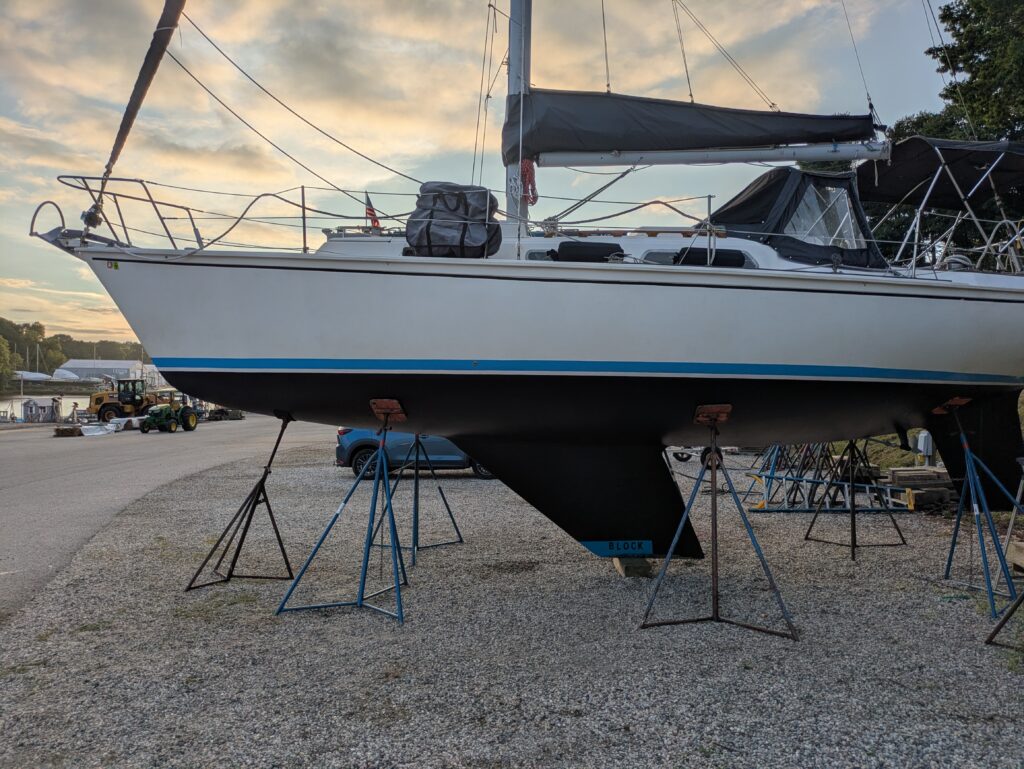
Made it to the boatyard early in the morning on Thursday the 13th and watched the experts haul Selkie out with the travelift.
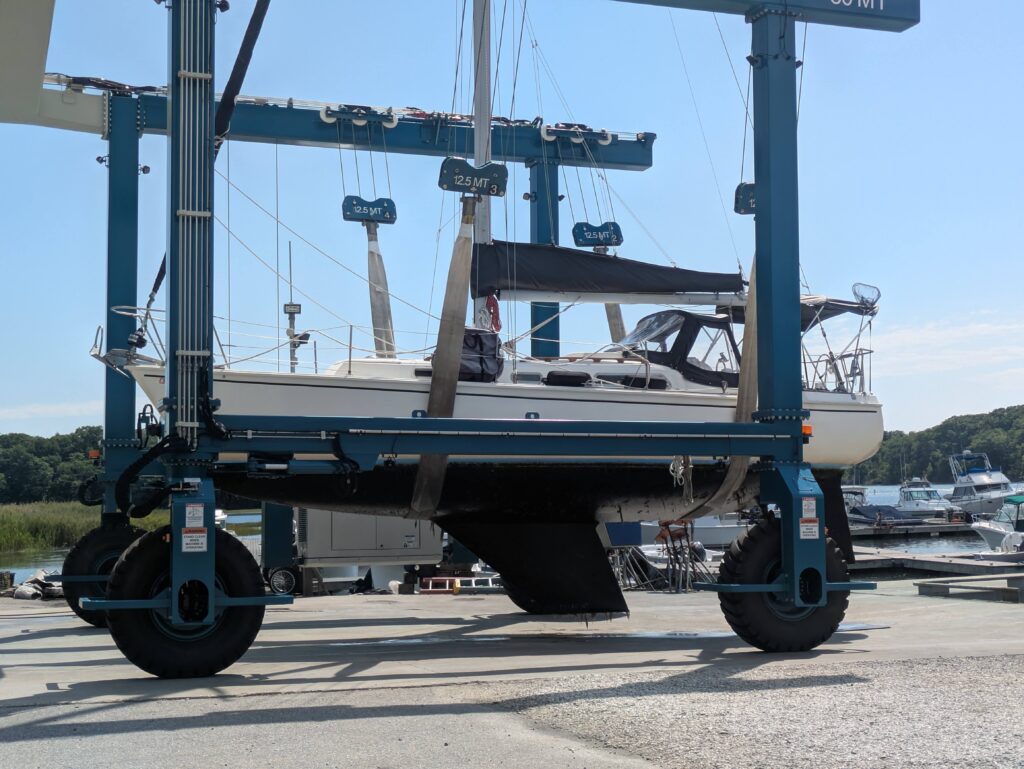
BoatNote: Travelift is a brand name for a special scaffold tractor that can lift a boat with soft cradles and drive it around the yard. Cool stuff. (This one is radio controlled even, the dude drives it with a remote box) Boats come out of the water regularly for maintenance, and while wooden boats need to be out for a short period of time so that the timbers don’t dry out, fiberglass boats don’t care a whit. The bottoms of all boats get painted with some form of growth inhibiting coating to keep barnacles, algae, seaweed, worms, and the like from attaching to the hull. For a fiberglass hull, the worst of it is that I will end up dragging a TON of weight and resistance and slowing Selkie down and burning fuel when I run on engine. For a wooden boat, the creatures will actually start EATING THROUGH THE HULL. Not great. Also of concern below the water line is a sacrificial anode for the propeller shaft. Made of zinc or aluminum, these are soft metals that will corrode due to galvanic action (fancy name for dissimilar metals in a salt solution creating a low voltage current) before the expensive stainless steel prop shaft, or brass prop. I’ll be doing that as well.
Selkie was… pretty dirty. I have to cop to that being my fault, because last year when I sanded the hull down all that way, I only put one coat of paint on. Honestly I was just half-thinking when I was listening to advice that “one coat is plenty” … which is true. IF there is already a base coat. I had taken that all away… so. Yeah, there was a lot of growth.
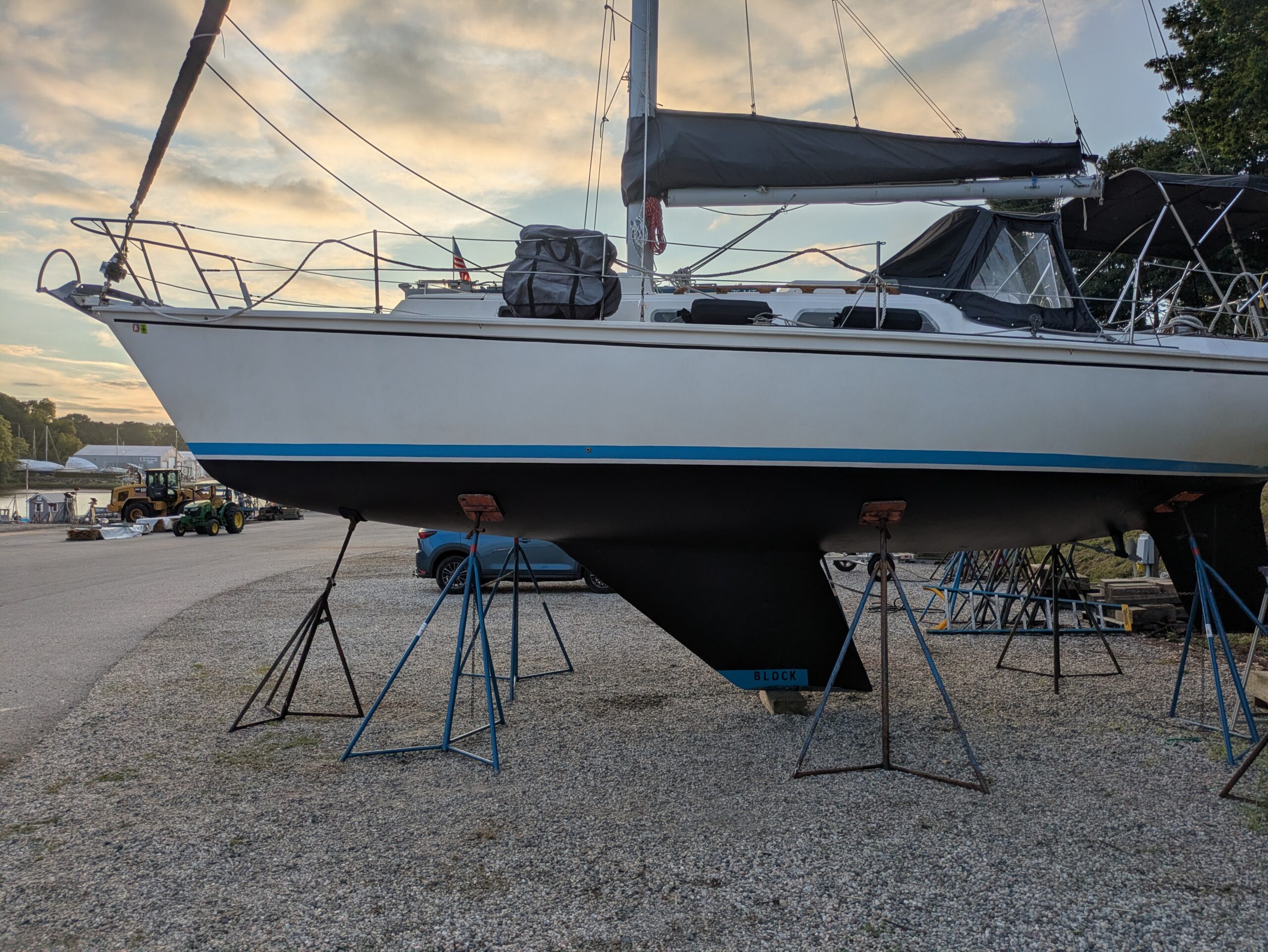
The yard guys power-washed the hull, and moved her over to sit on jack stands at the side of the yard where I could work on it.
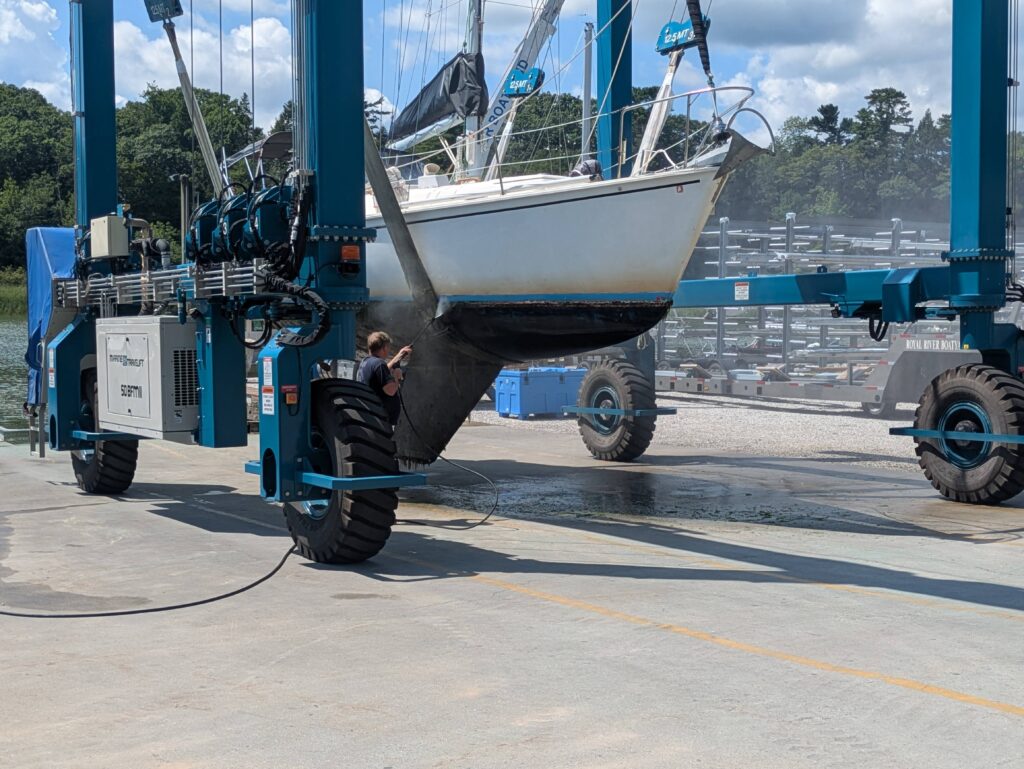
BoatNote: When out of the water the entire weight of the boat, unless she’s resting in the Travelift, sits on the very bottom of the keel on the wooden blocks. The stands you will see later, all along her sides, just hold her upright, and take a little of the forward/aft weight balance.
Once Selkie was in the yard, I could begin the work.
The projects:
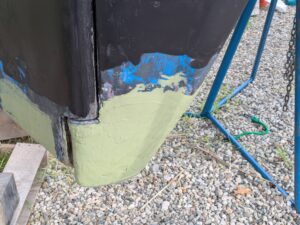
- Clean up and repair the rudder skeg tip with a new core, fiberglass, and fairing (smoothing)
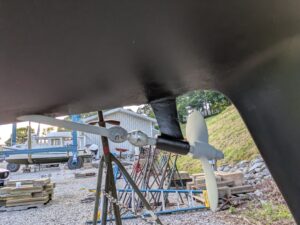
- Clean the propeller and shaft, paint the prop with anti fouling paint, put on a new zinc
- Sand and paint the hull with new tropic rated bottom paint (I was GOING to use a product called BioCop. More later)
- Repaint the boot stripe decorative blue line above the water
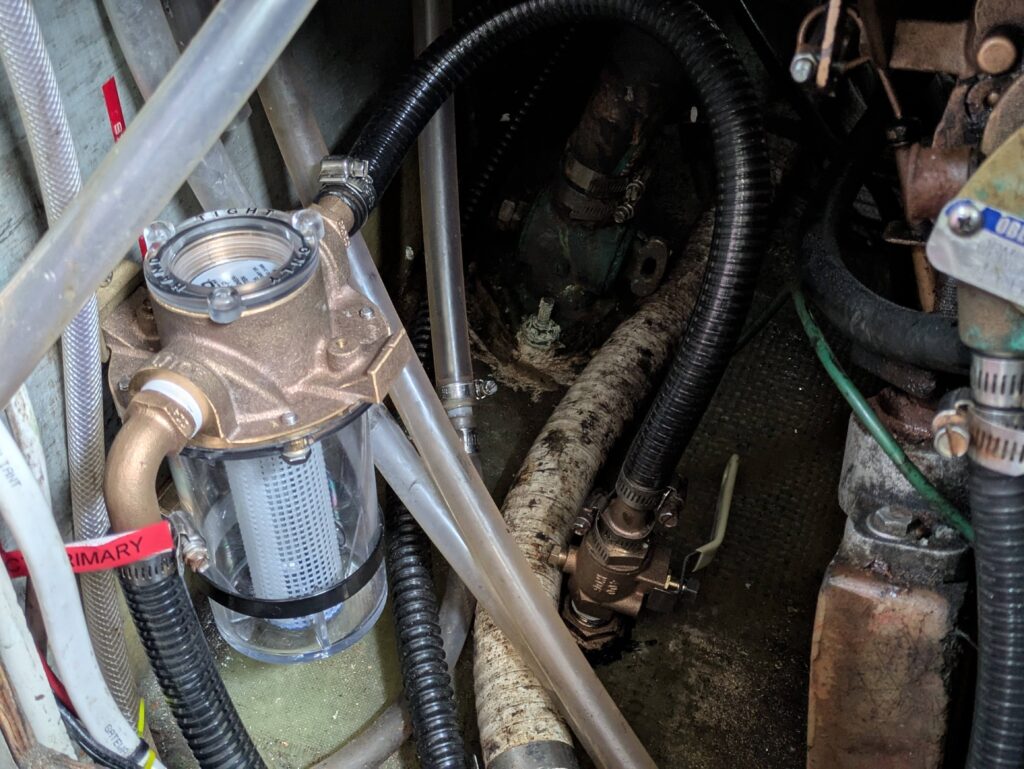
- Install a new, larger, through-hull seawater intake with an external strainer
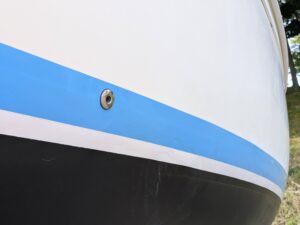
- Install a new above-water through hull to pump out the head drain for the sink and shower.
- Clean and wax the hull
The time frame? 4 days. I’m out late Thursday, and plan to go back in on Monday or Tuesday.
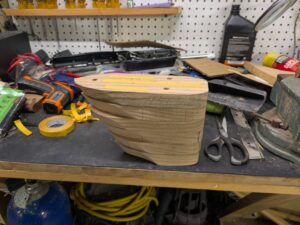
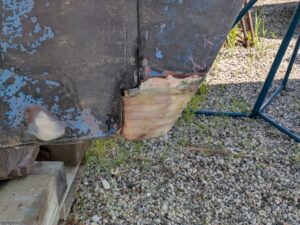
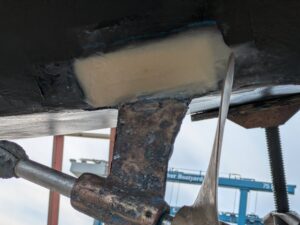
First project was the rudder skeg. I took a look at everything on dry land, and it was still as I’d last seen it: rudder seems fine, just, lacking the tip of the skeg. I decided to tackle it by making a new core for the piece with some oak I had at my mother’s house. I took a rough shape outline of the missing piece, and cut out a series of decreasing layers on my band saw, then attached them to each other with double sided tape just to see how it would fit.
Back at the yard, I did some final shaping, then buttered the top layer with thickened epoxy and clamped the whole assembly in place as best I could, and let it cure. After that, I used more thickened epoxy to roughly smooth out the shape, then layers of fiberglass and more epoxy to attach it to the existing structure.
While it’s curing (epoxy doesn’t dry like paint, it goes through a chemical reaction) I can work on other projects. Like the seawater intake.
Turns out that the local West Marine is going out of business… I guess private equity bought West and did what it always does, chop it up for parts to make the shareholders as much money as possible. I hate private equity. Anyway, the one up side of this is that the west store is wholly on sale in a big way. I bought myself paint there and had the yard return the BioCop because I managed to get two gallons of the Pettit Odyssey HD for $112 a gallon, and the BioCop was going to run me $420. EACH. I need TWO GALLONS.
I also found a new seawater strainer, intake through hull, and internal strainer for such a deep discount that the guy at the register actually looked a little sick for a moment. Like, I mean I paid at least $400 less than it was all worth at retail.
In order to install the new through-hull, I need a clean and smooth hull, so it’s time to pull the old one out, sand and clean, and then I can install the new unit with an adhesive sealant. Once done, it looks pretty solid! (Please don’t leak) and it’s time to move on to the hull.
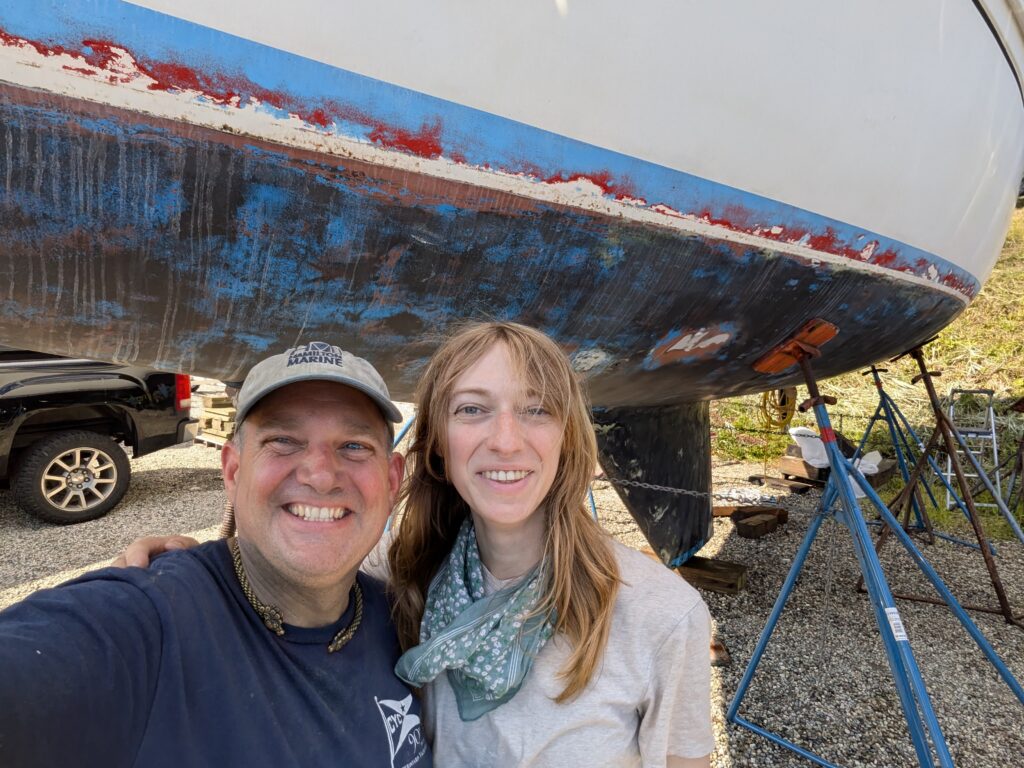
I had August (remember them, from July?) over to help me with sanding day, and I put them to work with the hand sander on the boot stripe area and upper portions of the bottom while I used the big drywall sander and went to work on the lower portion. We worked a solid day together and by the time we were done, we even had enough in us to do a cleaning of the hull and get the old brown marks that harbor water leaves behind removed. Nice!
The following day… was painting. So much painting. Then, more painting. Two coats on the hull, two coats of the boot stripe, a new white stripe to cope with the fact that I made the bottom paint come 2 inches further up and moved the boot stripe up as well. (I thought about leaving it, but that would have made them touching, and I was honestly afraid it would look too Blue Lives Matter for me, ick, so, the white gap it was!)
The painting also requires moving each of the jack stands one at a time, sanding under where they were, then painting that area. Tuesday morning, I will have the yard put her in the cradle and I’ll do the very bottom of the keel, and the spot where the bow stand was, you can’t move that as well or the boat tends to tip forward.
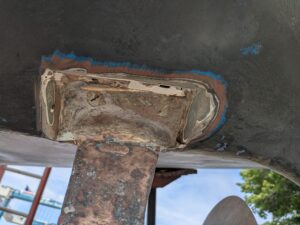
I finished fairing the skeg repair, got that sorted out… and discovered that there was a rotting bit of plug over where the port side propeller strut mount sits… so I had to dig THAT out and repair it as well, fair and paint. Essentially, this was a place where the strut that supports the rear of the propeller shaft bolts onto the body of the boat. There is a plug of fiberglass material over that to make the surface smooth, and when I investigated a crack there, the whole thing came free… so I had to make and install a new cap.
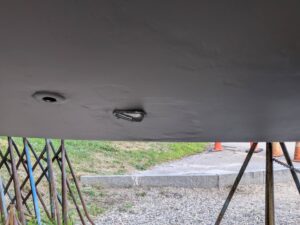
But finally, it is done! The boat went back in and *drumroll please* THE SEAWATER INTAKE DIDN’T LEAK!!! (Ok, one of the hoses leaked a little, and I tightened the clamp)
BoatNote: This is the first time I’ve installed a new underwater through hull fitting. It’s not a terribly complicated process, involving smoothing and cleaning both inside and out, attaching the outer side of the fitting with adhesive sealant, then screwing on the inside flange with a wrench. Side note: that space was only big enough to turn the wrench one. Eighth. Of. A. Revolution. Per. Go. UGH. Anyway, I didn’t EXPECT the intake to leak? I know I did the job right, but until you see it work in person, there are always the floating question marks.
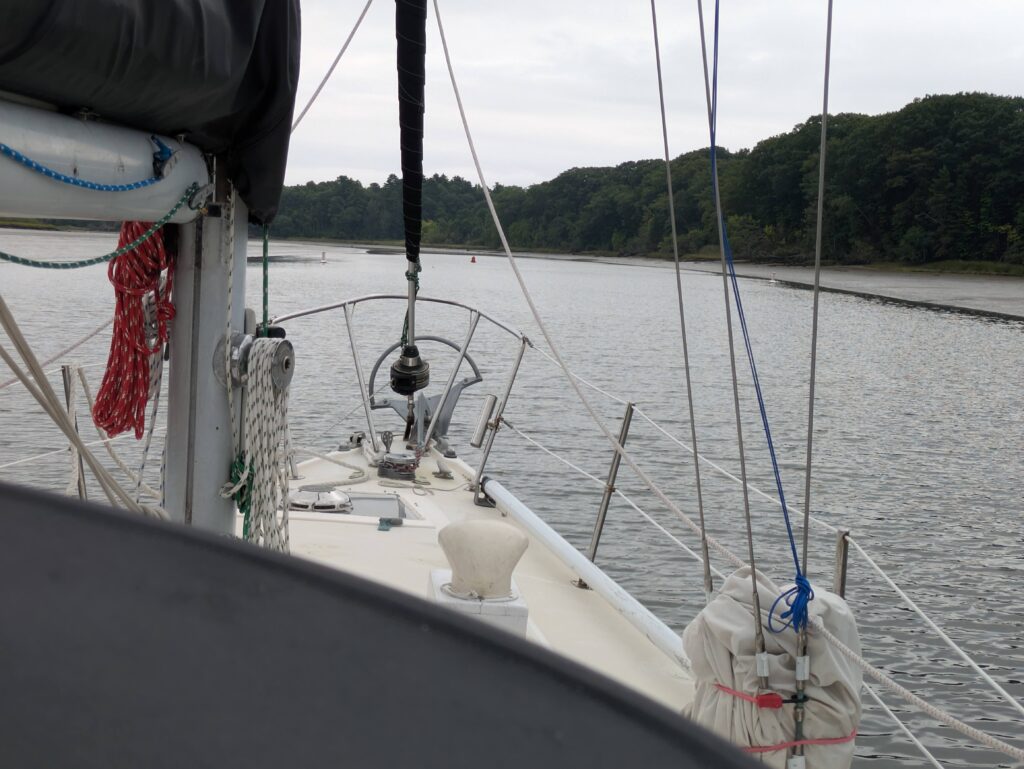
I headed back to Portland, through low tide this time, and the river is a little daunting when you can see how narrow it is. Also, DOZENS of great blue herons on the banks… I wonder if they nest in the area and some of these were this year’s kids learning to fish.
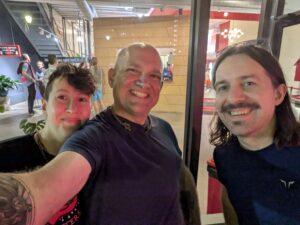
One more trip to Boston to visit friends, make a last swing through Boda Borg with Eliska and her other partner Justin, and then it was back to Portland for the big push off!
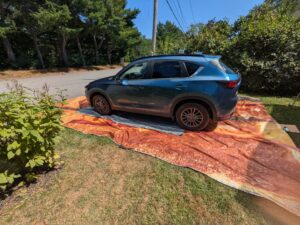
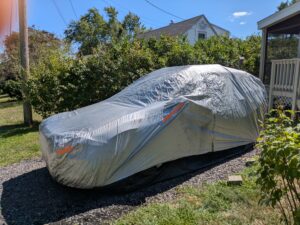
Among the things I needed to do were a last round of provisioning the boat, and wrapping up my car for storage. I got the car an oil change, filled the tank, then put a tarp and peppermint oil soaked cardboard under her, and a weather cover over her… hopefully that will be enough to keep rodents out of it until I’m back.
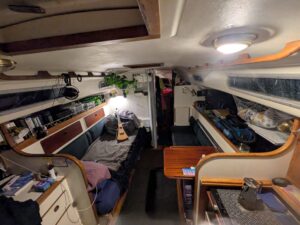
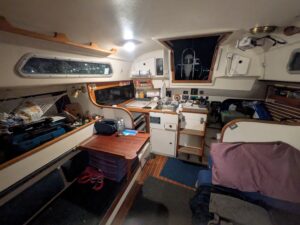
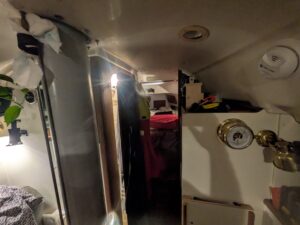
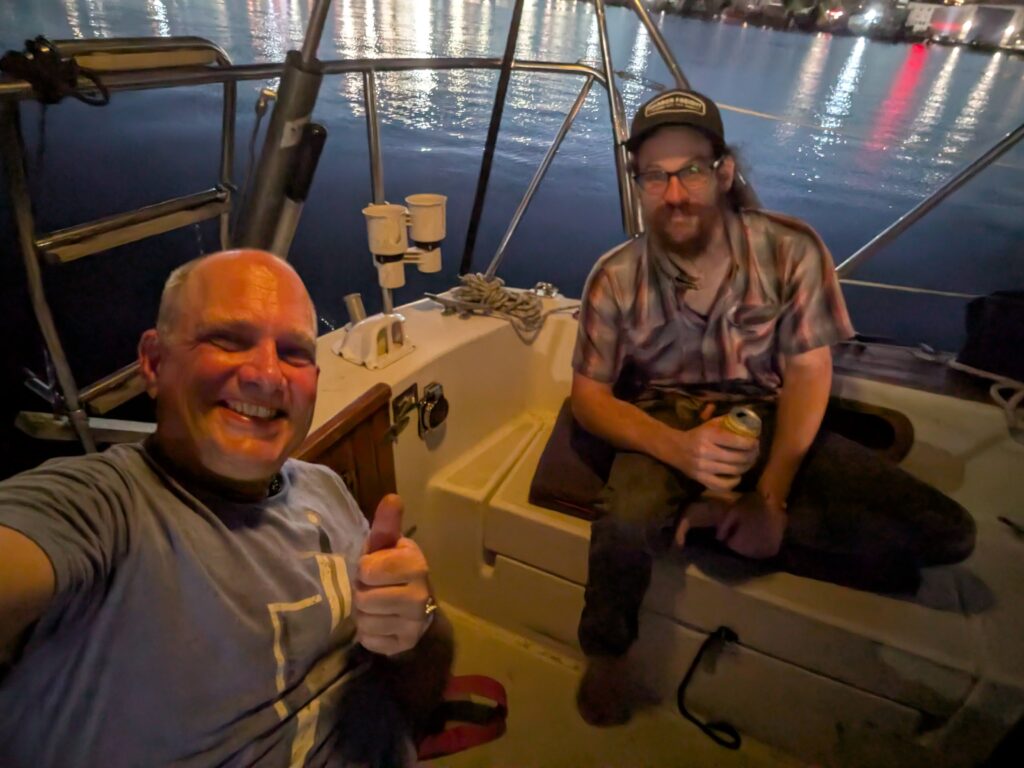
Rather unexpectedly, my friend Sean (Phillip in the SCA) happened to be both free and interested in a sailing journey, so he came aboard Tuesday night so we could make sail first thing on Wednesday.
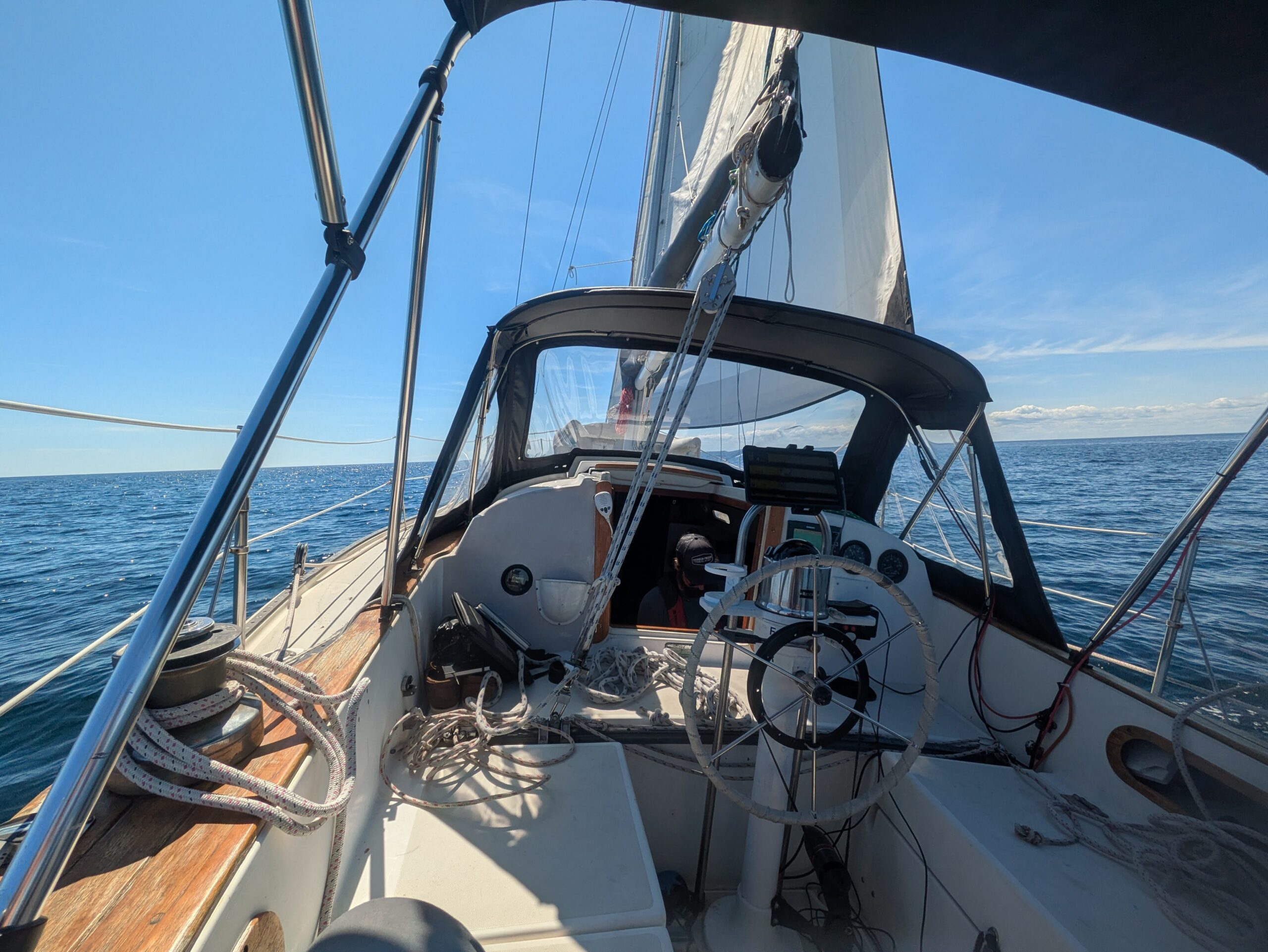
Wednesday departure at dawn, and the plan was to make it as far south as reasonable. I wasn’t interested in making it all the way to Boston and arriving in the night, and we had several days before my mooring was arranged in the harbor, so we got offshore looking for wind, and even eventually found some.
An amazing day of wildlife awaited us the 26th of August, with harbor porpoise seeing us out of the shipping channel, seals and gulls all around, several ocean sunfish (mola mola) and then a thresher shark jumping fully out of the water… I mean like 6’ out of the water. Sean saw it twice, I saw the second time.
Finally, to greet us on arrival to Massachusetts, as we were sailing in to Ipswitch harbor, I heard a “PSHWOOOOSSSHHHH” behind us, and whipped my head around to see a Minke whale only 100’ off our stern. She surfaced five or six times, passing from starboard to port, and then started a dive cycle. GORGEOUS.
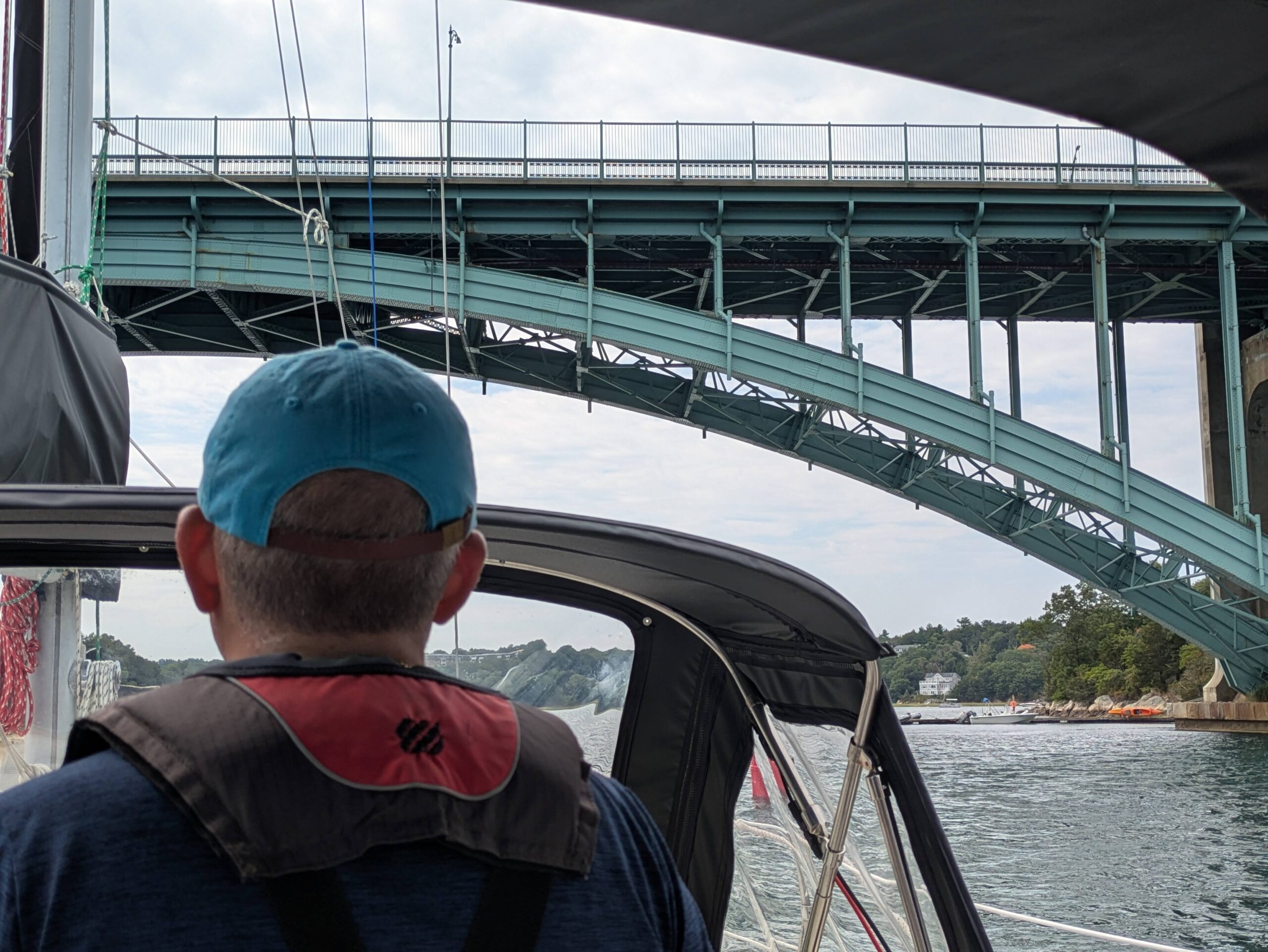
We anchored in Ipswich, near a lovely little point, and in the morning transited the Blyman canal of the Annisquam river, a good learning experience for me as canals are still a bit new to me, and will be in my future. One fixed bridge, two swing bridges to navigate, and we were in Gloucester harbor.
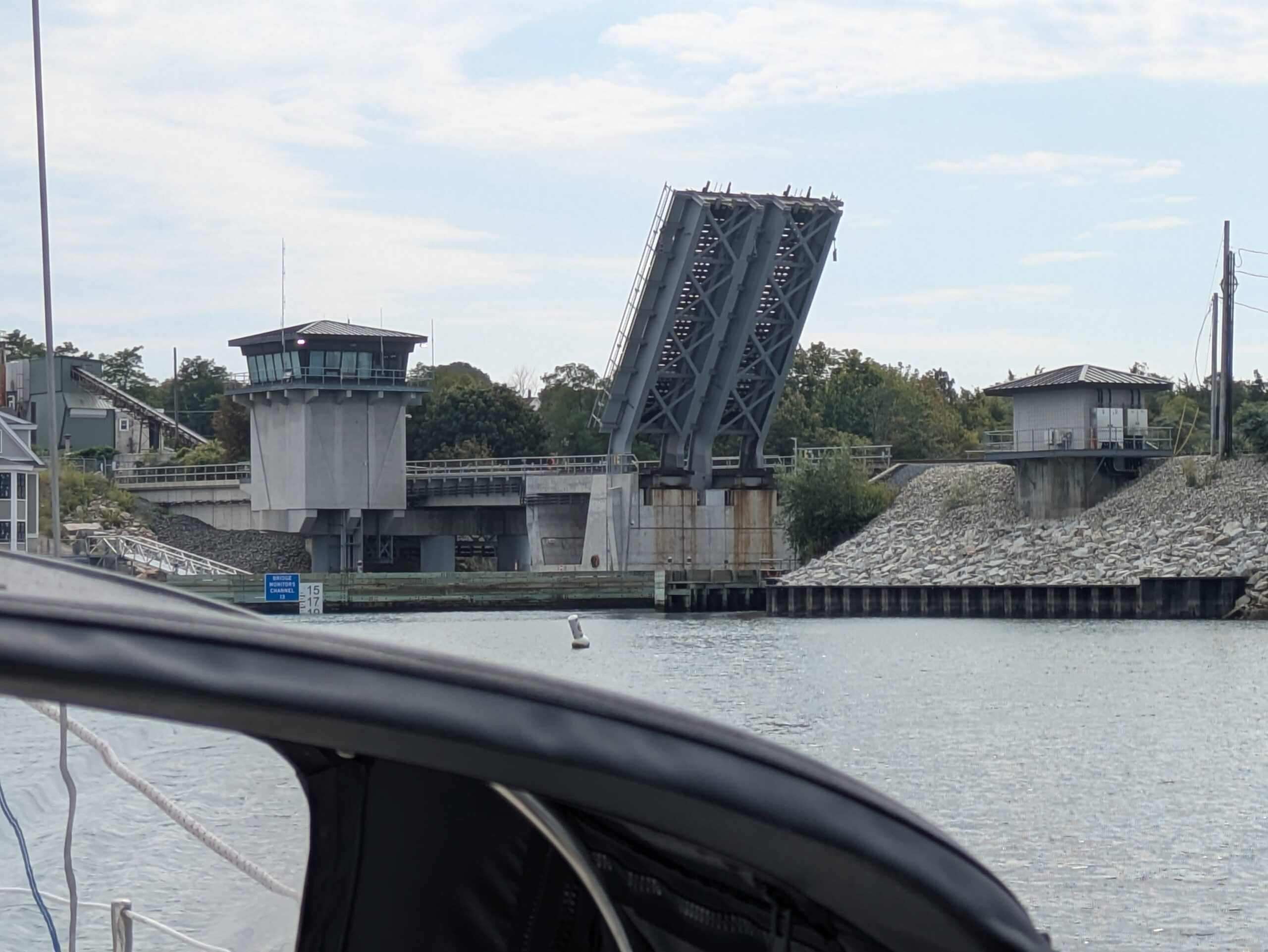
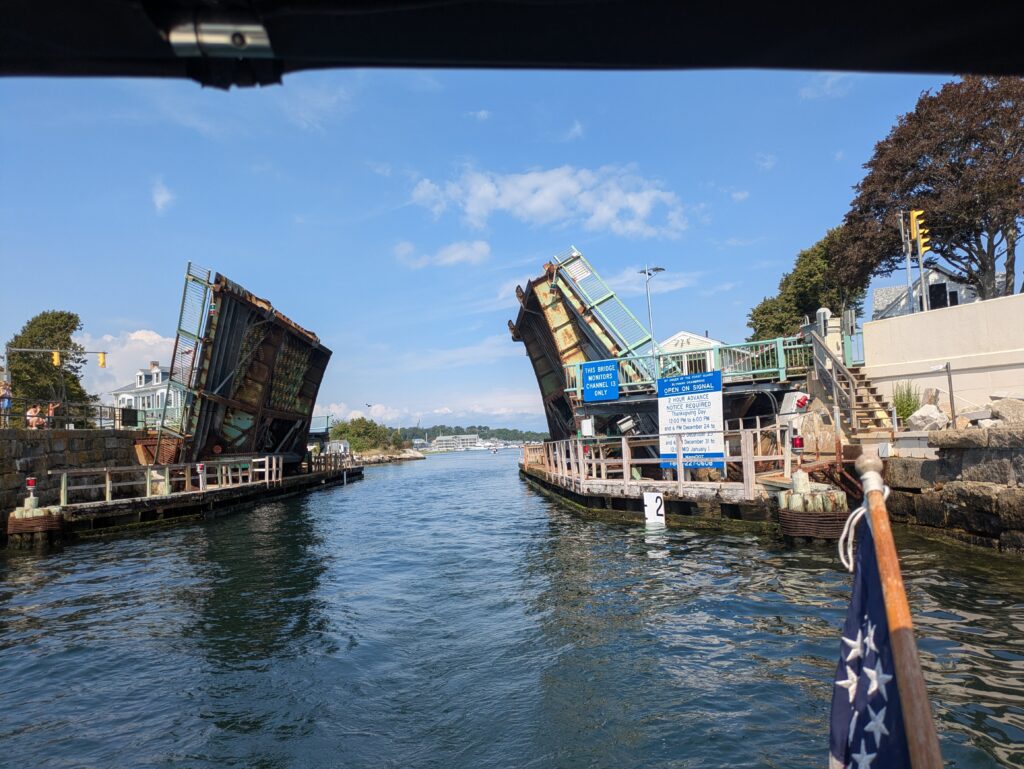
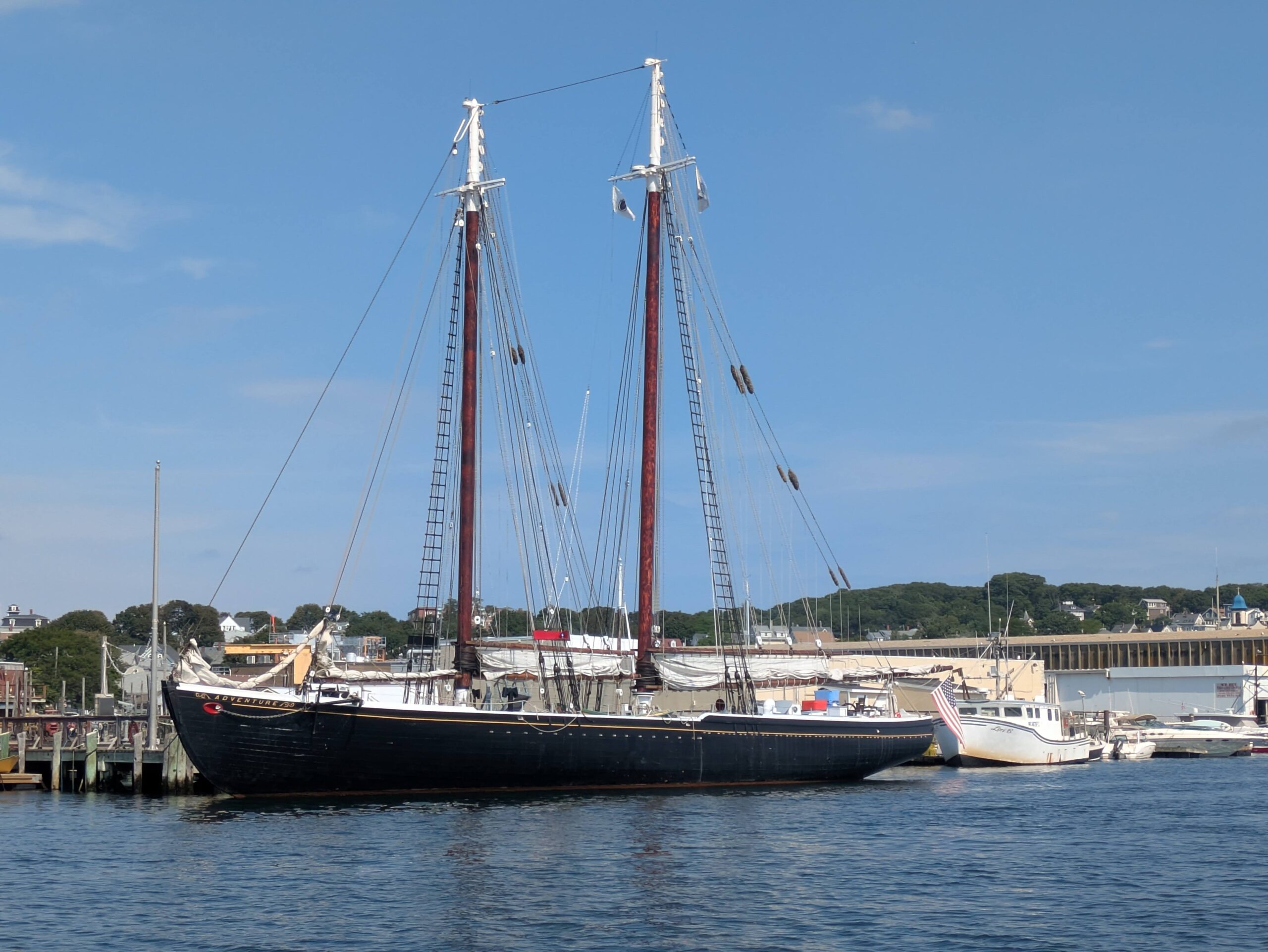
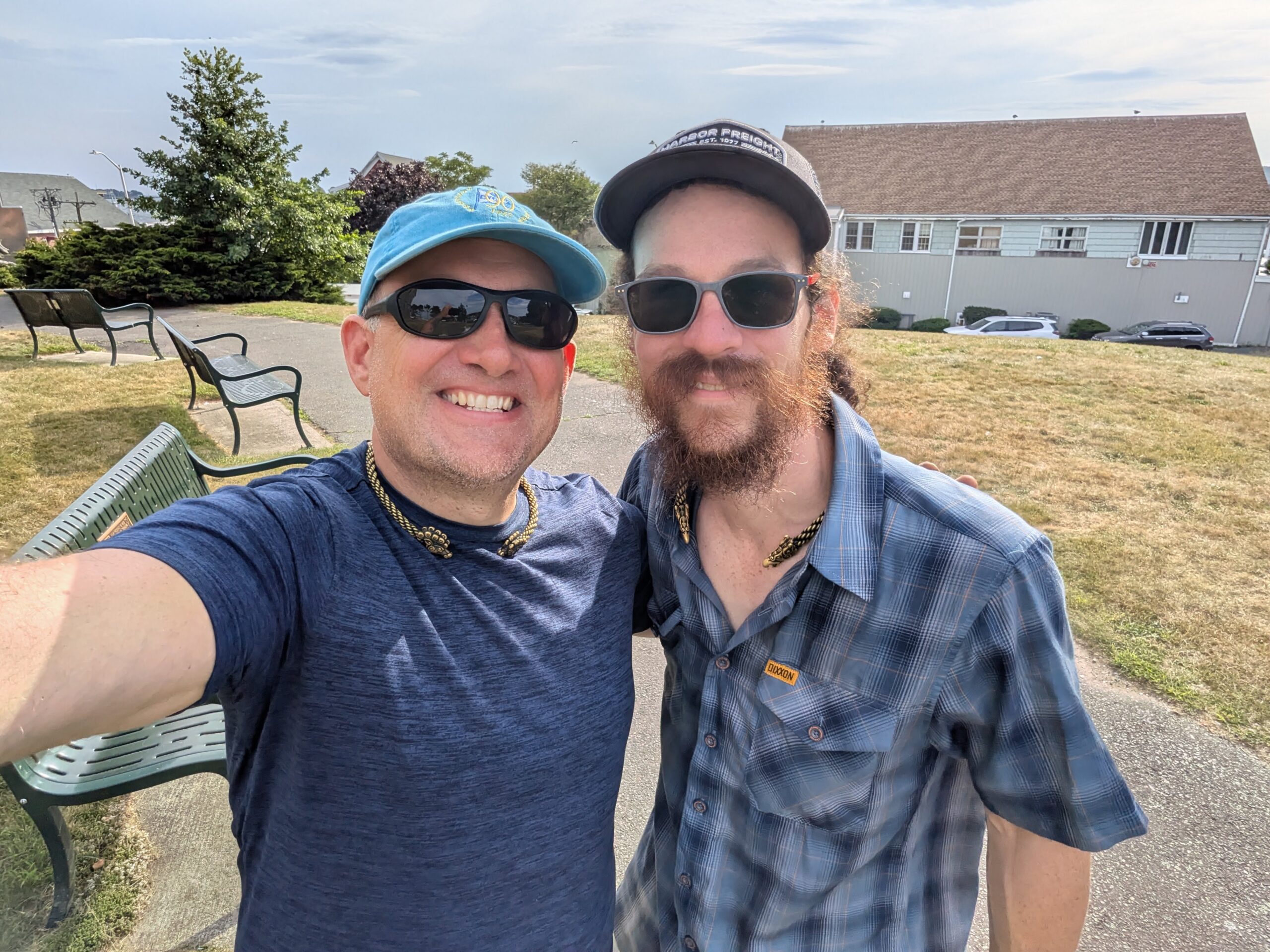
Since we had time, I decided to stay in Gloucester for the night, and we went ashore and met some boat neighbors, had dinner, listened to some live music, and retired. Up early the next morning, we found fog, and waited until the visibility opened up to start the passage to Boston. Two more Minke whales stopped by us on this leg, and we arrived in the Boston Harbor Islands area in the early evening, anchoring off of Long Island, where we went for a dinghy explore and had dinner.
The next day was our planned arrival in Boston, and we found our mooring and went ashore to meet up with Eliska, grab some lunch, and play tourist for a bit. We went to the Paul Revere house, visited the seals, and then I sent Sean on his way to return to his car, Eliska home for the evening, and settled in to enjoy a night on the boat. A night that included trying to figure out WHY there was a bunch of water in the bilge.
I will spare you the whole involved process, but one component of the new seawater intake, the place where the hose connects to the actual intake pipe on the engine, was juuuuuust sliiiiightly leaking… a slow seep. It wasn’t dripping so I could SEE it, no, just running down one hose onto another until it seeped into the bilge. Two hours of searching to find. Two turns of a screwdriver to fix. Such is the way of things.
BoatNote: The “bilge” is a trough built into the bottom of the living space on the boat, it sits right above the keel and under the floorboards. I can pull up one of several access boards to inspect it. Among other things, this serves as a place where water that gets inside can collect and be dealt with. There will ALWAYS be water coming in somehow, most often through the deck honestly… there are SO MANY HOLES in the deck. But sometimes from fittings under the water. You can taste the water (yuck, but I am guilty of this) to figure out whether it’s fresh or salt, and try to locate the leak accordingly. There are several pumps – one manual, one large and automated, one on demand – which I use to remove the water from the bilge.
Sunday the 30th, I woke to a calm harbor and a DRY BILGE. (Well, there were a few teaspoons of water, nothing to worry about) and went ashore in the dinghy to explore. I had lunch at the Barking Crab, a Boston staple of a beach bar in the middle of the seaport district, and met Eliska for a night aboard and then sailing to Spectacle Island in the morning.
After a leisurely breakfast, we motor sailed out to Spectacle and rented a mooring from the MA Parks and Recreation dept, then went ashore to have lunch and hike the island.
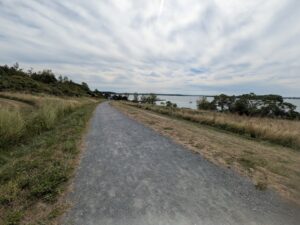
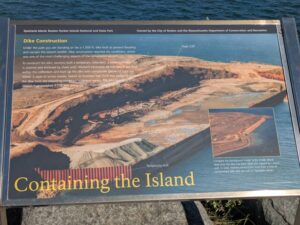
Spectacle is AMAZING. I realize that even if we’d been looking in ’86, I never would remember this island, because at that time, it was the open pit dump for all of Boston. It must have been wall to wall seagulls and stink. In 1997 the city decided to clean it up, and began the process of reforming, containing, and capping the island to contain the materials and create a recreational space. To make it even more cool? The dirt involved is the material removed during the Boston Big Dig process, where they took the 8 lane central artery, and moved it underground, leaving behind space for green belts, art trails, and recreation. Spectacle Island was completed in 2006, and so all of the trees there, many of which look and feel like mature trees, are no more than 20 years old. Wild.
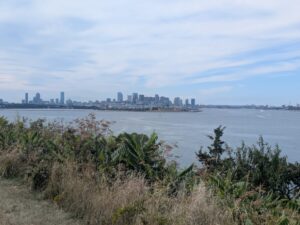
Eliska and I returned to harbor, and ate dinner and marveled at the beauty that is the buildings all lit up for the night. An urban environment for certain, but also deeply beautiful. When we were in Boston harbor in the 80s, my mother makes a note of how dirty the water was, and certainly it would track with what I saw of the history of Spectacle and the harbor. Now, while I wouldn’t necessarily swim in it since it’s a working harbor… the water looks basically normal. It’s heartening to see humans learn and do better, and not just stay in a cycle of abuse and neglect. If we can keep it going, we really could accomplish anything.
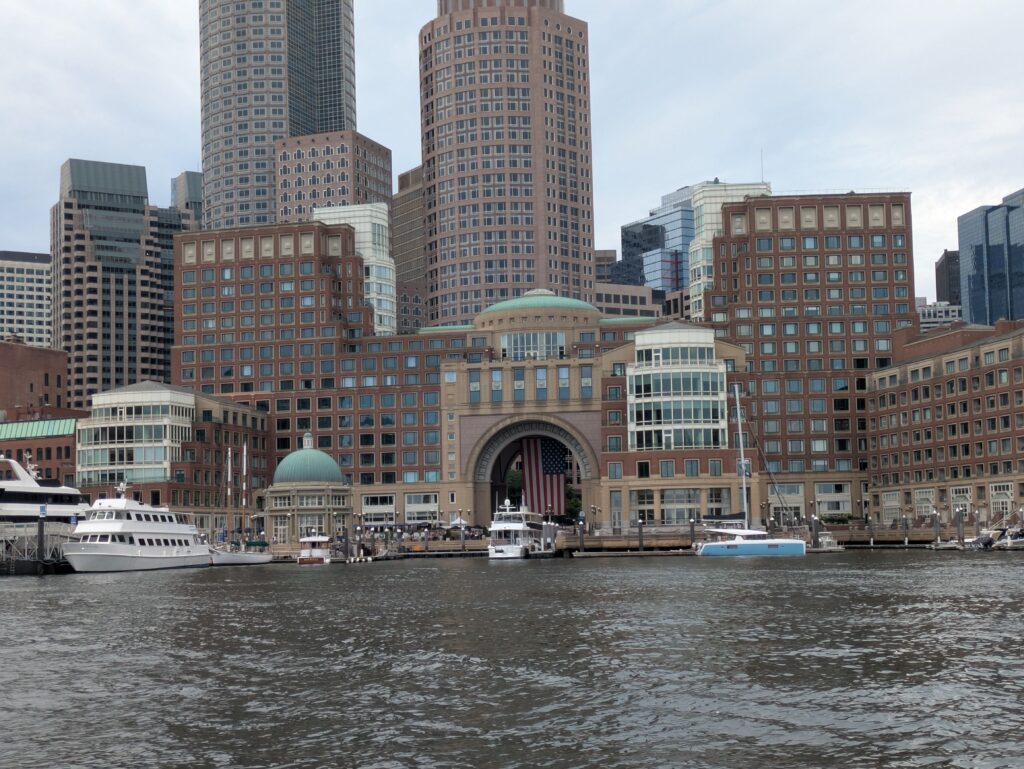
For now, that’s it for August. The adventure is just beginning, and it’s hard to remember that I’m not wrapping up and going ashore in a few days, but moving onward. I’ll spend the rest of the week in Boston, see more people and things, and then move on toward NYC as my next port of call.
Leave a Reply